

Deck lubrication is the single highest-leverage maintenance task on any treadmill. The friction between the walking belt and deck is what the drive motor fights all day; when lubrication breaks down, amp draw climbs, the belt and deck wear each other out, and eventually the motor controller fails from sustained overcurrent. A large fraction of "dead treadmill" service calls trace back to a deck that was never lubricated.
This guide from the NCFET certified technician team covers the two lubrication systems in use, how to test whether a deck actually needs lubricant (instead of guessing), and the professional application procedure.
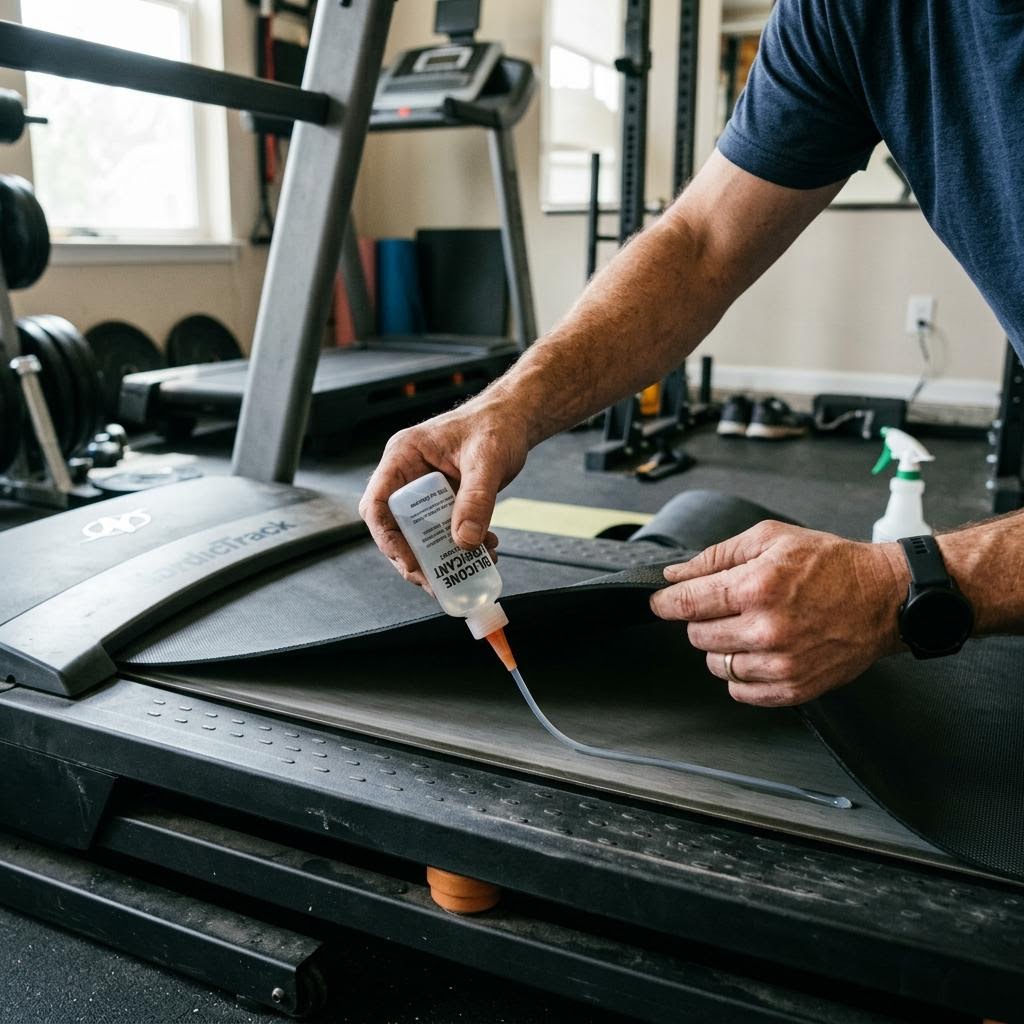
Know your system: silicone-lubricated vs. wax/no-maintenance decks
Most home and light-commercial treadmills use decks designed for periodic 100% silicone lubrication. Many commercial machines instead use wax-infused belts or phenolic-coated decks that manufacturers designate "no lubrication required" — adding silicone to some of these systems can actually degrade them by breaking down the wax layer.
The service manual is the authority. If it is unavailable, inspect the belt underside: wax-system belts typically show a distinct waxy infused backing, while silicone-system belts have a plain woven backing. When in doubt on a commercial machine, contact the manufacturer's technical support line before applying anything.
Test, don't guess: the touch test and amp-draw test
Touch test: unplug the machine, lift the belt edge, and reach to the deck center. A properly lubricated silicone deck feels slightly slick. Bone-dry, dusty, or squeaky-clean means it is due.
Amp-draw test (the professional standard): with a clamp meter on the motor supply lead or the machine's service mode display, record motor current with a consistent test load walking at a fixed speed. Compare against the model's service manual specification. Elevated amps that drop noticeably after lubrication confirm friction was the issue; amps that stay high point to belt/deck wear beyond what lubricant can fix.

Intervals that reflect real usage
Calendar-based intervals are a rough proxy; usage-based intervals are better. A common professional baseline for silicone systems: every 3 months or 130–150 miles of use for home machines, and monthly checks in commercial settings with lubrication as indicated by the touch/amp tests. Hot, dry climates and heavy users shorten intervals. Modern commercial consoles often track accumulated miles — use them.
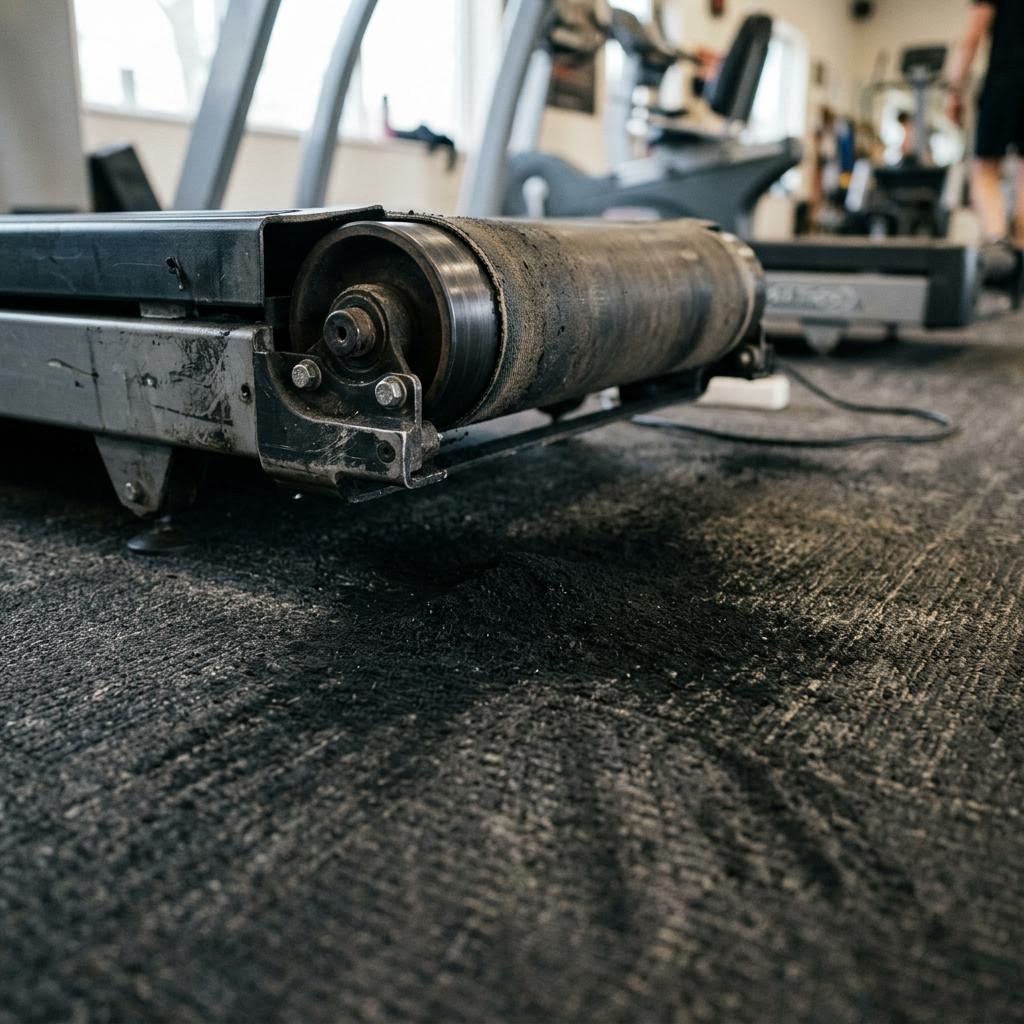
Common mistakes that destroy decks
The failure patterns technicians see repeatedly:
- Using WD-40, 3-in-1 oil, or automotive silicone spray — solvents and additives attack belt adhesives and deck coatings. Only 100% silicone made for treadmills (or the manufacturer's wax product).
- Over-application — a soaked deck slings lubricant onto the drive belt and rollers, causing the drive belt to slip. One ounce (about 30 ml) per application is a typical maximum.
- Lubricating on top of embedded grit — always vacuum under the belt edges first; lubricant plus debris forms an abrasive slurry.
- Lubricating a wax/no-maintenance system with silicone — verify the system type first.
- Masking a worn-out belt with repeated lubrication — if the belt underside is frayed or amp draw stays high after lubrication, the belt (and possibly deck surface) needs replacement.
How to lubricate a silicone-system treadmill deck
Unplug and clean
Disconnect power. Vacuum along both belt edges and as far under the belt as accessible to remove grit.
Loosen the belt slightly (if required)
On machines with very tight belt-to-deck contact, loosen each rear roller bolt one half turn (symmetrically) to create access. Skip if you can already reach the deck center.
Apply lubricant under the belt
Lift one belt edge and apply a thin bead of 100% silicone from the front of the deck to the rear, reaching as close to the center as possible. Repeat from the other side. Total application: about 0.5–1 oz (15–30 ml).
Re-tension if loosened
Return the rear roller bolts to their original position with equal turns per side.
Distribute
Plug in, run the belt at 2–3 mph, and walk on it for 3–5 minutes so footstrike pressure spreads the lubricant across the full deck surface.
Verify
Confirm quieter, smoother operation. If you have a baseline amp reading, re-measure — a healthy lubrication drops amp draw measurably on a previously dry deck.
Tools & Supplies
- 100% silicone treadmill lubricant (or manufacturer wax product)
- Vacuum with crevice tool
- Allen wrench (if belt loosening is needed)
- Clamp meter (optional, for amp verification)
Frequently Asked Questions
How often should I lubricate my treadmill?
For silicone-system decks, a common baseline is every three months or every 130–150 miles of use, whichever comes first — adjusted by the touch test (the deck center should feel slightly slick). Wax-infused and phenolic 'no-maintenance' systems should not be silicone-lubricated at all unless the manufacturer specifies it.
What happens if you never lubricate a treadmill?
Friction between belt and deck climbs steadily, which raises motor current. The progression is predictable: belt slippage and hesitation, then accelerated belt/deck wear (black dust under the machine), then thermal or overcurrent shutdowns, and finally motor controller or motor failure. A neglected $15 lubrication commonly becomes an $300–$800 repair.
Can you use too much treadmill lubricant?
Yes. Over-application slings silicone onto the rollers and motor drive belt, which then slips — trading a friction problem for a traction problem. It also attracts dust. Stay near one ounce per application and always walk the belt afterward to distribute it.
Standards & References
This guide is provided as a free educational resource by NCFET and its certified technician team. Always follow your equipment manufacturer's service manual, and leave line-voltage electrical work to qualified professionals. You are welcome to cite or link to this guide; please attribute it to the NCFET certified technician team and link to this page.
Related Guides
Need a professional? Or want to become one?
Find qualified service providers in the NCFET directory, verify any technician's credential at ncfet.com/verify, or start your own path to national certification.